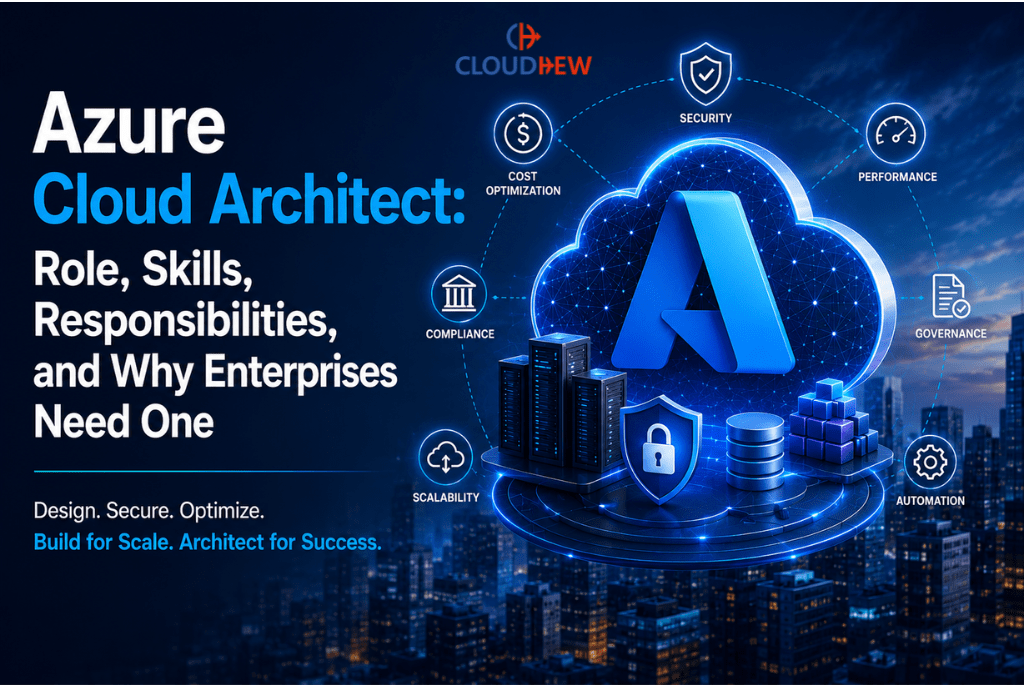

The initial wave of enterprise cloud adoption was defined by velocity. Companies rushed to lift-and-shift existing workloads out of legacy data centers to capture the immediate promises of flexibility and infrastructure reduction. However, as cloud footprints expand and mature, enterprise leaders are discovering that ad-hoc adoption creates a fragile ecosystem. Today, digital transformation leaders recognize that sustainable cloud success is no longer only about moving workloads to the Microsoft Azure cloud. It depends on designing the right architecture, security model, governance framework, automation layer, cost controls, and scalability roadmap from day one.
Without a blueprints-first approach, cloud environments quickly devolve into complex networks of unoptimized resources, opaque billing cycles, and fragmented security controls. To pivot from basic adoption to true operational excellence, organization leaders require specialized leadership.
| “Cloud migration moves workloads. Cloud architecture determines whether those workloads scale, stay secure, and deliver business value.” |
For CIOs, CTOs, and IT Directors, bridging the gap between high-level business vision and resilient infrastructure requires a dedicated visionary: the Azure Cloud Architect. This technical guide explores the deep strategic value of enterprise cloud architecture and outlines how partnering with an expert team secures long-term digital growth.
What Is an Azure Cloud Architect?
An Azure Cloud Architect is a high-level technology strategist responsible for designing, building, and optimizing scalable, secure, and resilient infrastructure solutions within the Microsoft Azure ecosystem. This role sits at the intersection of enterprise business strategy and advanced cloud engineering. Far from operating in a purely technical vacuum, an experienced architect translates complex corporate initiatives—such as entering new global markets, accelerating product release cycles, or launching AI initiatives—into production-ready cloud designs.
| “An Azure Cloud Architect connects business goals with technical cloud execution.” |
An architect’s scope spans across the entirety of the cloud footprint. They do not merely deploy individual virtual machines or manage simple databases; they design the holistic ecosystem. This encompasses baseline Azure infrastructure design, multi-region networking topologies, identity and access management structures, compliance policies, container hosting platforms, automated CI/CD pipelines, robust monitoring systems, and comprehensive disaster recovery runbooks. Ultimately, they build a future-proof foundation that empowers developer velocity while maintaining corporate guardrails.
Why Azure Cloud Architecture Matters for Enterprises
When an enterprise scales its operations without a structured Azure cloud architecture, it builds upon a foundation of compounding technical debt. High-performing organizations treat cloud systems as dynamic software-defined ecosystems rather than static hardware replacements. Failing to establish a rigorous architecture before executing an Azure cloud migration or modernization initiative introduces severe business risks.
Consider the critical structural pillars that proper architectural design solves:
- Security: Fragmented access controls and perimeter gaps expose sensitive data. A dedicated architecture implements a unified identity perimeter, isolating workloads and systematically reducing the enterprise blast radius.
- Governance: Without automated policies and clear subscription hierarchies, multi-department cloud environments quickly fragment into a chaotic web of shadow IT and non-standard deployments.
- Cost Control: Ad-hoc provisioning leads to massive cloud sprawl, over-allocated resources, and idle infrastructure that rapidly drain corporate budgets.
- Performance and High Availability: Legacy architectures fail to leverage native cloud resilience features like Availability Zones and auto-scaling sets, resulting in preventable performance bottlenecks and application downtime.
- Compliance: Enterprises operating in highly regulated fields (such as healthcare, finance, and public sectors) risk severe regulatory penalties if their cloud layouts lack continuous, auditable compliance baselines.
- Automation: Manual provisioning severely limits operational agility. Modern architecture embeds Infrastructure as Code (IaC) to ensure rapid, error-free, and repeatable environment deployments.
- Business Continuity: Unstructured configurations lack robust, cross-region replication and validation mechanisms, leaving the enterprise highly vulnerable to catastrophic data loss during unforeseen outages.
- Hybrid and Multi-Cloud Readiness: Modern enterprises must bridge on-premises data centers with cloud resources. Without structured hybrid designs, organizations face data isolation, latency penalties, and broken workflows.
- AI and Data Platform Readiness: Advanced analytics models, data lakes, and generative AI systems require highly structured, low-latency, and clean ingestion layers. Skipping the architectural blueprint means your data pipelines will fail to scale under production AI loads.
Without the right architecture, enterprises inevitably face a mix of cloud sprawl, billing surprises, security gaps, performance degradation, failed migrations, and debilitating operational complexity. Investing in deliberate cloud architecture up front transforms the cloud from a volatile cost center into an agile engine for business growth.
Key Responsibilities of an Azure Cloud Architect
An Azure Cloud Architect owns the lifecycle of an enterprise’s cloud posture. Their day-to-day work is divided into several highly interconnected architectural disciplines:
Azure Infrastructure Design
Architects determine the underlying foundational building blocks of the cloud environment. This involves choosing optimal compute types (e.g., virtual machines, serverless functions, or container platforms), selecting appropriate high-performance storage solutions, aligning subscription boundaries, and establishing resilient availability zones to guarantee continuous uptime.
Azure Landing Zone Design
A critical responsibility is the creation of an enterprise-grade Azure landing zone. This architecture structures management groups, establishes hierarchical subscription topologies, defines identity boundaries, maps out core network routings, and enforces corporate governance baselines. This ensures that new workloads can be onboarded rapidly into a pre-secured environment.
Cloud Migration Planning
Before a single application moves, the architect leads comprehensive dependency mapping, workload discovery, and risk analysis. Through tailored Azure migration services, they design structured migration waves, choose between rehosting, replatforming, or refactoring strategies, minimize business disruption during cutovers, and perform rigorous post-migration validations.
Security and Identity Architecture
Operating under a strict Zero Trust philosophy, architects design identity perimeters utilizing Microsoft Entra ID. They implement robust role-based access control (RBAC), fine-tune conditional access policies, enforce least-privilege models, protect secrets inside Azure Key Vault, and monitor the corporate posture through Microsoft Defender for Cloud.
Azure Networking Design
Enterprise networking requires sophisticated connectivity models. The architect designs Virtual Networks (VNets), establishes secure cross-premises tunnels using VPN Gateways or dedicated Azure ExpressRoute lines, configures private endpoints to isolate internal traffic, manages enterprise firewalls, and implements intelligent load balancers for optimal traffic distribution.
Governance and Compliance
To prevent resource anarchy, architects deploy automated guardrails via Azure Policy. They establish mandatory asset tagging strategies, define strict resource hierarchies, and engineer real-time compliance dashboards to ensure audit-readiness against global compliance standards like ISO, SOC2, or HIPAA.
Cost Optimization and FinOps
Architects build ongoing financial accountability directly into the infrastructure design. By partnering with procurement and IT leaders, they analyze spending patterns, implement Azure Reservations and Savings Plans, eliminate idle resources, configure precise budget alerts, and right-size environments to achieve maximum cloud ROI.
Backup and Disaster Recovery
To protect critical corporate data, architects architect comprehensive business continuity strategies. This includes orchestrating automated backups via Azure Backup and engineering real-time replication workflows using Azure Site Recovery, ensuring the enterprise meets strict Recovery Point Objectives (RPO) and Recovery Time Objectives (RTO).
DevOps and Automation Enablement
Modern cloud infrastructure must be treated as code. Architects embed Azure DevOps automation and GitHub Actions into the core organizational engineering workflows. They construct robust Continuous Integration and Continuous Deployment (CI/CD) pipelines and use declarative tools like Terraform or Bicep to fully automate environment provisioning.
Monitoring and Observability
An invisible cloud is an unmanageable cloud. Architects build deep operational visibility using Azure Monitor, Log Analytics workspaces, and Application Insights. They establish centralized log collection, design proactive system health dashboards, and wire up automated alerting systems to address infrastructure anomalies before they impact users.
AI and Data Platform Readiness
As enterprises embrace advanced analytics and intelligent automation, the architect prepares the data foundation. They design secure ingestion pathways, high-volume data lakes, and structured integration layers supporting advanced platforms like Microsoft Fabric, Azure Databricks, and modern enterprise AI architectures.
Essential Skills Required for an Azure Cloud Architect
A successful cloud architect possesses an advanced balance of deep, technical platform expertise and sharp, corporate business acumen.
Technical Skills:
- Microsoft Azure Cloud Platform Mastery: Authoritative knowledge of global cloud economics, physical region structures, and foundational service capabilities.
- Advanced Compute & Serverless: Deep understanding of Azure VMs, App Services, Functions, and enterprise container orchestrators like Azure Kubernetes Service (AKS).
- Enterprise Networking Topologies: Practical mastery over Hub-and-Spoke designs, Virtual WAN, Azure Firewall, ExpressRoute circuits, and private link architectures.
- Cloud Security Architecture: Proficiency with Microsoft Entra ID (formerly Azure AD), conditional access policies, RBAC, Key Vault, and Defender for Cloud frameworks.
- Infrastructure as Code (IaC): Advanced automation authoring capabilities using Terraform, Azure Bicep, ARM templates, and shell scripting.
- CI/CD & Modern DevOps: Deep integration skills using Azure DevOps pipelines, GitHub Actions, and artifact management systems.
- Data Architecture Foundations: Experience designing cloud-native storage accounts, Azure SQL databases, Cosmos DB, and enterprise data lakes.
- Data & AI Platform Readiness: Foundational knowledge of modern analytical environments, including Microsoft Fabric, Synapse Analytics, and Databricks clusters.
- Business Continuity Engineering: Designing real-time failovers, continuous backup plans, and replication policies via Azure Site Recovery.
- FinOps & Cost Management tools: Mastery over Azure Cost Management, budgeting tools, and advisor recommendations for operational rightsizing.
Business Skills:
- C-Suite & Stakeholder Communication: The unique ability to articulate complex technical architecture decisions in terms of business impact, risk mitigation, and corporate ROI.
- Strategic Cloud Roadmap Planning: Formulating long-term cloud blueprints that scale in step with the broader corporate growth strategy.
- Risk Assessment & Management: Identifying project roadblocks, security vectors, and architectural single points of failure before deployment.
- Financial & Cost-Benefit Analysis: Evaluating licensing models, calculating total cost of ownership (TCO), and designing capital vs. operational expenditure forecasts.
- Enterprise Architecture Thinking: Aligning cloud initiatives with legacy environments, compliance structures, and cross-departmental operations.
| “The best Azure Cloud Architects do not only design infrastructure. They design confidence, control, and scalability into the cloud journey.” |
Azure Cloud Architect vs. Azure Cloud Engineer
While these two technical roles sound identical to procurement departments, they address fundamentally different lifecycle requirements. Confusing the strategic visionary with the tactical execution specialist frequently results in delayed timelines, misconfigured scopes, and unoptimized environments.
An Azure Cloud Architect focuses on long-term strategy, macro-level system designs, governance guardrails, organizational security policies, and high-level architectural decisions. Conversely, an Azure Cloud Engineer focuses heavily on technical implementation, configuration, day-to-day support, and operational deployment.
| Functional Area | Azure Cloud Architect | Azure Cloud Engineer |
| Primary Focus | Strategy, long-term vision, holistic design, and risk prevention. | Implementation, day-to-day deployment, and operational execution. |
| Responsibilities | Designing governance models, secure landing zones, and target blueprints. | Building resources, writing scripts, provisioning VMs, and resolving alerts. |
| Decision-Making Level | High strategic influence; aligns directly with CIO, CTO, and IT Directors. | Tactical; operational execution under project manager guidelines. |
| Core Tools Used | Azure Architecture Center, Whiteboards, Miro, Visio, ARM/Bicep/Terraform. | Azure Portal, Azure CLI, PowerShell, Git, CI/CD runners, Monitoring consoles. |
| Business Involvement | High; deeply engaged in cost-benefit analysis, roadmaps, and compliance. | Low; primarily focused on technical sprints and resolving support tickets. |
| Cloud Design Ownership | Full ownership of the enterprise-wide ecosystem architecture. | Executes component configurations within the boundaries of the design. |
| Implementation Role | Consultative oversight; reviews execution code for architectural alignment. | Hands-on engineer; creates resources and writes operational scripts. |
| Governance Role | Establishes Azure Policies, tagging schemas, and identity boundaries. | Remediates non-compliant resources and maintains active environment health. |
Common Challenges Enterprises Face Without Proper Azure Architecture
Skipping the architectural design phase exposes enterprises to a series of compounding technical and financial hurdles. Without a specialized architect at the helm, organizations frequently stumble into these costly traps:
- Uncontrolled Azure Costs: Environments suffer from chronic over-provisioning, unattached storage disks, idle virtual machines, and missing reservation plans, leading to severe monthly billing surprises.
- Fragmented Subscription Topologies: Teams create isolated subscriptions with no centralized management hierarchy, creating visibility blind spots across departments.
- Ungoverned Resource Proliferation: Individual developers provision ad-hoc components without standardized naming conventions, location rules, or lifecycle tags, resulting in severe cloud sprawl.
- Weakened Identity Perimeters: Lax access permissions, over-privileged administrator assignments, and missing conditional access rules expose the cloud backend to external security threats.
- Security Misconfigurations: Publicly exposed storage buckets, open internet ports on sensitive servers, and missing encryption standards create massive vectors for data breaches.
- Absent Governance Frameworks: The absence of real-time Azure Policies allows unauthorized or overly expensive resource SKUs to be provisioned unchecked.
- Flawed Networking Topologies: Complex routing designs, overlapping IP address allocations across VNets, and a lack of proper network segmentation lead to broken application communication and internal traffic exposure.
- Chronic Application Downtime: Workloads are built with single points of failure, missing automated failover logic, and ignoring multi-region redundancy architectures.
- Stalled and Delayed Migrations: Lift-and-shift projects grind to a halt because application dependencies were poorly mapped, resulting in unforeseen integration breaks.
- Untested Backup Systems: Backup policies lack automation or cross-region isolation, meaning data recovery capabilities remain completely unverified until a crisis hits.
- Elevated Compliance Risks: Audits expose non-compliance with frameworks like PCI-DSS or SOC2 because the underlying cloud design lacks immutable trails and enforcement controls.
| “Most cloud problems do not start after migration. They start before migration, when architecture is skipped.” |
Signs Your Business Needs an Azure Cloud Architect
It is vital to recognize when internal IT engineering teams require the guidance of a dedicated architect. If your enterprise exhibits any of the following operational symptoms, it is time to bring in strategic cloud architecture consulting:
- Your Azure bills are increasing without clear visibility or matching growth in user traffic.
- Your workloads are growing rapidly but infrastructure layouts are completely undocumented.
- Your migration plan is delayed, over budget, or halted by sudden technical dependencies.
- Your development teams are creating cloud resources at will without centralized governance.
- Your cloud environment consistently triggers flags during security reviews and access audits.
- Your business-critical applications are facing unexplained latency or performance issues.
- Your backup and disaster recovery plans have never been rigorously tested in production simulations.
- Your business is planning advanced AI, big data analytics, or microservices modernization.
- Your internal IT engineering team needs expert Azure guidance and framework structures.
- Your executive leadership wants clearer visibility and better overall cloud ROI.
Recognizing these signs early can help enterprises avoid expensive redesigns, security issues, and migration delays. Shifting from reactive firefighting to proactive architecture ensures long-term operational success.
Business Outcomes of Partnering with an Azure Cloud Architect
Investing in professional cloud design delivers clear, measurable benefits to enterprise bottom lines. Decision-makers who prioritize robust architecture see substantial returns across their operations:
- Accelerated Market Delivery: Standardized templates and automated pipelines empower development teams to provision environments safely, cutting deployment cycles from weeks to minutes.
- Hardened Enterprise Security: Embedding automated identity guardrails and continuous posture tracking drastically minimizes human error and reduces the threat surface.
- Measurable Financial Savings: Active resource rightsizing, automated scheduling rules, and optimized pricing tiers eliminate waste, maximizing your return on cloud investment.
- Elastic Performance and Scale: Systems dynamically adjust compute and storage capabilities in real time, handling massive customer usage spikes smoothly without degrading performance.
- Simplified Enterprise Governance: Automated compliance checking ensures consistent resource management across every branch of your organization.
- Reduced Migration Risk: Deep analytical assessments and structured wave roadmaps ensure complex enterprise software transitions to the cloud without disrupting daily business operations.
How an Azure Cloud Architect Supports Cloud Migration
An enterprise cloud migration is far more complex than just copying files to a remote server. Attempting a large-scale migration without structured architectural guidance regularly results in broken application integrations and severe project delays.
Through tailored Azure migration services, an experienced architect manages the migration lifecycle as a structured transformation program:
- Current-State Infrastructure Assessment: Deep scanning of existing data centers to catalog hardware allocations and operating networks.
- Application Dependency Mapping: Tracing database calls and system integrations to identify clustered applications that must move together.
- Migration Readiness Analysis: Evaluating enterprise workloads against cloud-native requirements to determine the optimal path.
- Secure Landing Zone Preparation: Building the core identity, networking, and governance baselines before moving workloads.
| “A successful Azure migration is not just a technical move. It is a structured transformation program.” |
Azure Landing Zone: The Foundation of Enterprise Cloud Success
An Azure landing zone is the structural foundation for safe, scalable enterprise cloud adoption. It provides a multi-subscription environment designed to host workloads securely while enforcing unified governance, identity, and networking baselines.
An architect configures core operational pillars within an enterprise landing zone, including subscription structures, automated identity models, robust network topologies (like Hub-and-Spoke), security policy enforcement, and comprehensive logging baselines. Deploying a validated landing zone prior to executing large-scale costly migrations ensures that every new workload inherits your enterprise’s security and compliance standards automatically.
Azure Cloud Security: Why Architecture Comes First
Perimeter firewalls alone cannot protect multi-tenant enterprise cloud setups. Modern Azure cloud security must be baked directly into the core structural design, treating identity as the primary perimeter.
An Azure Cloud Architect builds defense-in-depth across the ecosystem using core security strategies: a strict Zero Trust philosophy, identity perimeters via Entra ID, tight role-based access controls (RBAC), conditional access rule enforcement, network segmentation via NSGs, private service connectivity endpoints, and continuous posture tracking via Microsoft Defender for Cloud.
Azure Cost Optimization and FinOps
Cloud flexibility can easily lead to budget overruns if your infrastructure lacks strong governance. True Azure cost optimization requires a strategic approach built directly into your ongoing architecture design.
Unmanaged cloud footprints typically suffer from chronic cost drivers like over-provisioned virtual machines, orphaned storage disks, improper data storage tiering, missing tracking tags, and lack of reservation plans. An Azure Cloud Architect embeds clear financial governance from day one.
| “Cloud cost optimization is not a one-time activity. It is an architecture discipline.” |
How CloudHew Helps Enterprises with Azure Cloud Architecture
Building and maintaining an expert in-house cloud architecture team is an expensive, slow process. CloudHew provides enterprises with immediate access to senior cloud strategists, technical visionaries, and certified architects to modernize your infrastructure safely.
As an elite enterprise consulting firm, CloudHew helps organizations transition from basic cloud adoption to true operational excellence. Our comprehensive CloudHew Azure services span across every stage of your modernization journey: core architecture consulting, enterprise landing zones, automation engineering, cost containment dashboards, and full migration support.
CloudHew helps enterprises move from cloud adoption to cloud maturity with secure, scalable, governed, and cost-optimized Azure architecture.
Conclusion
True cloud success is measured by the resilience, security, and business agility of your infrastructure. Moving workloads to Microsoft Azure is only the first step; long-term value depends on having a clear, structured architecture. As enterprise requirements expand to include advanced data analytics, automated DevOps workflows, and complex AI workloads, having an expert architectural strategy becomes a critical competitive advantage.
Partnering with professional architects helps enterprise leaders transform their cloud footprint from an unoptimized expense into an agile engine for innovation. Investing in a solid cloud foundation protects your data, optimizes your budget, and ensures your infrastructure is ready for future digital transformation.
FAQ Section
Q: What does an Azure Cloud Architect do?
An Azure Cloud Architect defines the strategic direction, security architecture, and infrastructure blueprints for an organization’s Microsoft Azure cloud environment. They translate business goals into secure, scalable, and cost-efficient technical designs.
Q: Why does an enterprise need an Azure Cloud Architect?
Without a dedicated architect, enterprises frequently suffer from cloud sprawl, unexpected billing spikes, security vulnerabilities, and application downtime. An architect builds automated guardrails to prevent these risks.
Q: What is the difference between an Azure Cloud Architect and an Azure Cloud Engineer?
An architect focuses on macro-level strategy, ecosystem design, policy governance, and risk mitigation. An engineer focuses on tactical implementation, configuration, and day-to-day scripting infrastructure deployment.
Q: What technical skills are required for an Azure Cloud Architect?
An architect must possess deep expertise in Azure compute, enterprise networking, Entra ID security models, Infrastructure as Code (Bicep/Terraform), and centralized monitoring platforms.
Q: How does an Azure Cloud Architect help with cloud migration?
An architect evaluates existing local applications, maps out complex system dependencies, chooses the safest migration paths, prepares a secure landing zone, and orchestrates migration waves.
Q: What is an Azure landing zone?
An Azure landing zone is a pre-configured multi-subscription environment that establishes unified identity, networking, security, and governance baselines before migrating workloads.
Q: How can Azure architecture reduce cloud costs?
An architect builds automated cost controls directly into your infrastructure design by right-sizing resource tiers, setting up automated shutdown schedules, and utilizing Azure Reservations.
Q: How does Azure cloud architecture improve security?
By applying strict Zero Trust principles, an architect isolates workloads, configures private connectivity links, and enforces least-privilege role-based access control.
Q: When should a business hire or consult an Azure Cloud Architect?
Your organization should consult an architect when experiencing rapidly increasing cloud bills, facing delayed or stalled migrations, or planning complex data or AI initiatives.
Q: How can CloudHew help with Azure cloud architecture?
CloudHew provides end-to-end strategic consulting, landing zone engineering, migration planning, cost optimization, and managed cloud services tailored to long-term business growth.