
Introduction: From AI Experiments to Enterprise Intelligence
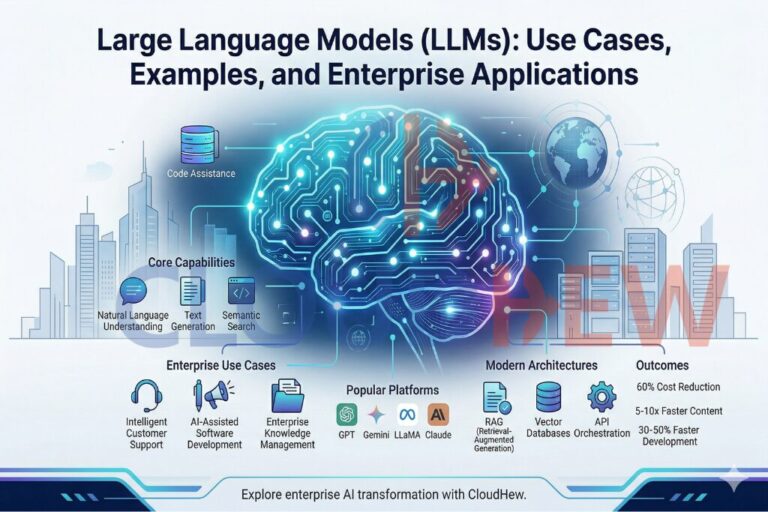
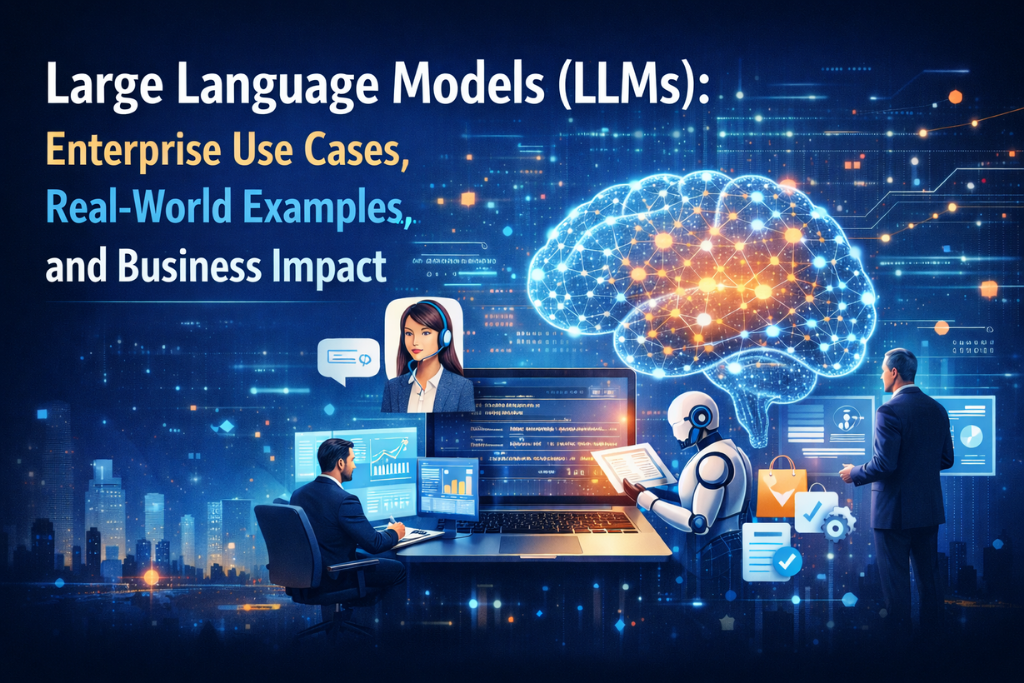
Large Language Models (LLMs) are redefining how enterprises operate, innovate, and scale intelligence across the organization.
What started as conversational AI has rapidly evolved into enterprise-grade systems capable of reasoning over vast datasets, automating knowledge work, enhancing customer experiences, and accelerating decision-making.
However, enterprise value from LLMs does not come from models alone. It comes from:
- Strategic alignment
- Secure data integration
- Responsible AI governance
- Production-ready architectures
At CloudHew, we help enterprises move beyond pilots and embed LLMs into core business workflows—securely, responsibly, and at scale.
What Are Large Language Models (LLMs)?
Large Language Models are advanced AI systems trained on massive datasets of text to understand, generate, summarize, and reason over natural language.
Modern LLMs can:
- Interpret complex user queries
- Generate human-like responses
- Analyze documents and structured data
- Power intelligent assistants and autonomous workflows
Popular enterprise-grade LLMs include:
- OpenAI GPT models
- Google Gemini
- Meta LLaMA
- Anthropic Claude
But in enterprise environments, the real challenge is not model selection—it’s integration, governance, and measurable ROI.
How Enterprises Use Large Language Models (With Real Examples)
1. AI-Powered Customer Support & Virtual Assistants
Enterprise Impact
- 24/7 support automation
- Reduced support costs
- Faster resolution times
- Improved customer satisfaction
LLM Capabilities
- Context-aware conversations
- Multilingual support
- Knowledge base reasoning
- CRM and ticketing integration
CloudHew Approach
We design secure, domain-trained AI assistants integrated with enterprise data, role-based access controls, and escalation logic—ensuring accuracy and compliance.
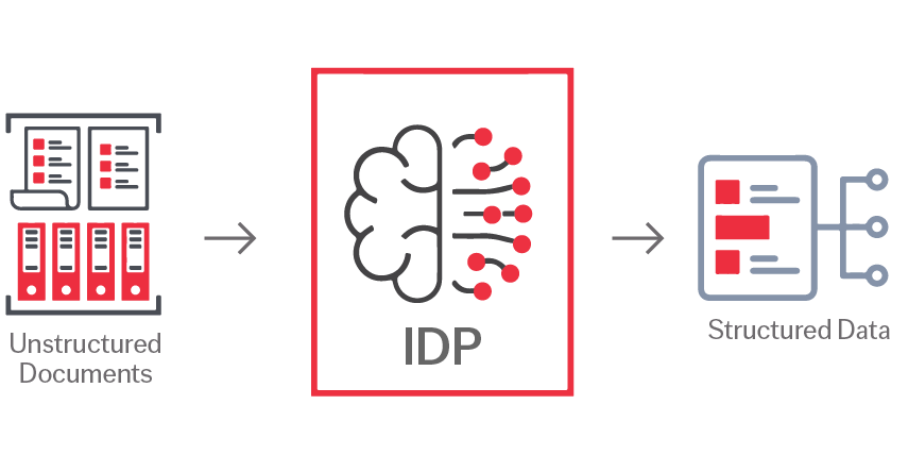
2. Intelligent Document Processing & Knowledge Automation
Enterprises deal with contracts, invoices, policies, SOPs, and regulatory documents at massive scale.
LLM Use Cases
- Contract analysis and clause extraction
- Policy summarization
- Compliance checks
- Legal and procurement automation
Business Value
- Faster document turnaround
- Reduced manual effort
- Lower compliance risk
CloudHew builds LLM-powered document intelligence platforms with audit trails, human-in-the-loop review, and enterprise-grade security.
3. Enterprise Search & Knowledge Management
Traditional keyword search fails in complex enterprise environments.
LLMs Enable
- Semantic search across documents, emails, wikis
- Natural language queries over enterprise data
- Contextual answers instead of links
Result
Employees find answers in seconds—not hours.
CloudHew implements RAG (Retrieval-Augmented Generation) architectures that keep proprietary data secure while delivering highly accurate responses.
4. Sales, Marketing & Revenue Intelligence
LLMs are transforming go-to-market operations.
Examples
- Personalized email and proposal generation
- CRM insights and deal summarization
- Customer sentiment analysis
- Competitive intelligence reports
Outcome
Higher conversion rates, faster deal cycles, and better pipeline visibility.
CloudHew ensures these systems are brand-aligned, data-governed, and measurable—not generic content generators.
5. Software Development & Engineering Productivity
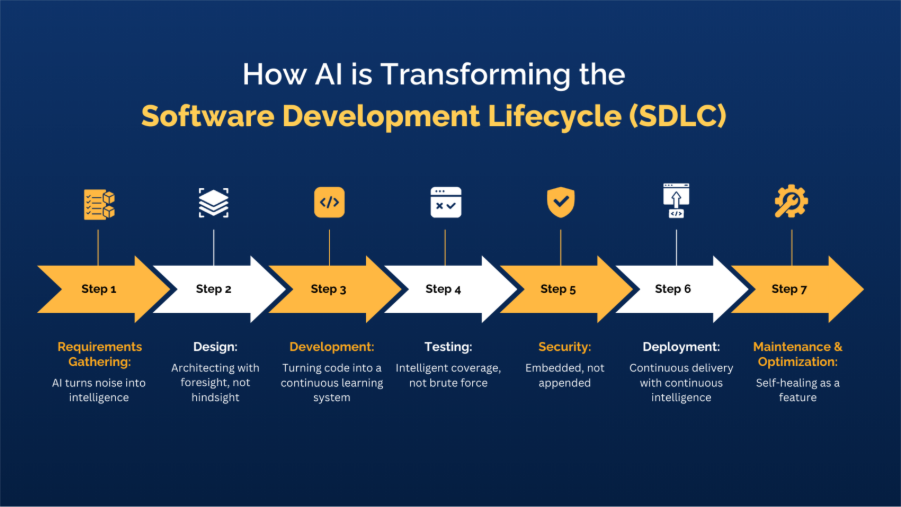
LLMs now play a critical role in engineering teams.
Enterprise Use Cases
- Code generation and refactoring
- Documentation automation
- Test case creation
- Legacy system modernization
CloudHew Focus
We integrate LLMs into secure DevOps pipelines, ensuring IP protection, quality controls, and enterprise compliance.
6. Data Analytics & Executive Decision Support
LLMs act as natural language interfaces to complex data systems.
Capabilities
- Ask business questions in plain English
- Generate executive summaries from dashboards
- Explain trends, anomalies, and forecasts
Value
Decision-makers gain faster, clearer insights—without needing technical intermediaries.
CloudHew combines LLMs with modern data platforms to deliver trusted, explainable analytics.
Key Challenges Enterprises Face with LLM Adoption
While the potential is massive, enterprises face real risks:
- ❌ Data leakage and IP exposure
- ❌ Hallucinations and unreliable outputs
- ❌ Regulatory and compliance violations
- ❌ Unclear ROI and ownership
- ❌ Disconnected PoCs that never scale
This is where most LLM initiatives fail.
CloudHew’s Enterprise LLM Framework
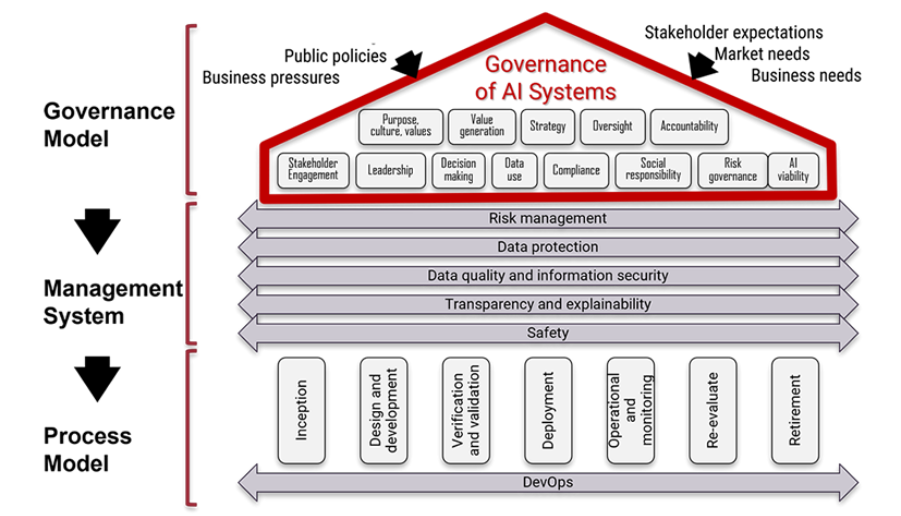
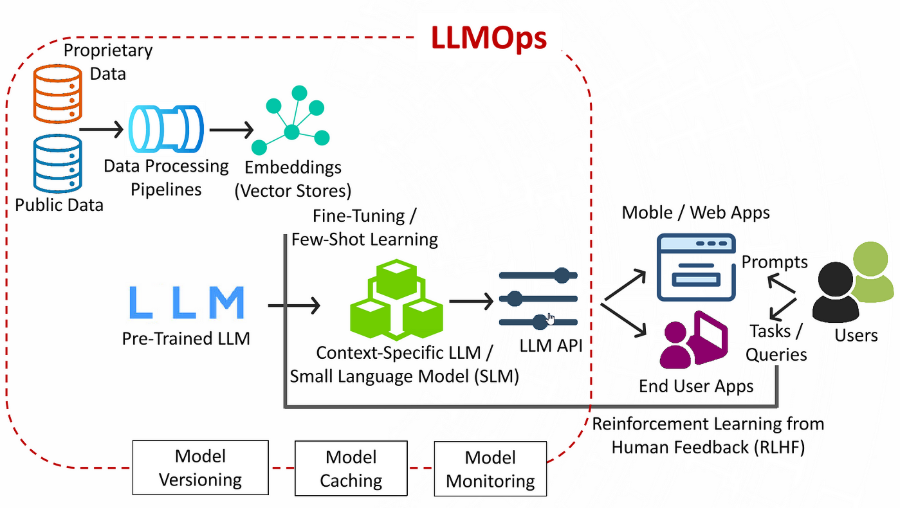
CloudHew enables end-to-end enterprise LLM adoption through:
1. AI Strategy & Use Case Prioritization
Align LLM initiatives with business KPIs—not hype.
2. Data Readiness & Architecture
Secure, governed access to enterprise data using RAG and fine-tuning strategies.
3. Model Selection & Optimization
Choose the right LLMs based on performance, cost, latency, and risk.
4. Responsible AI & Governance
Bias mitigation, auditability, explainability, and regulatory compliance.
5. Production Deployment & Scale
Cloud-native, monitored, cost-optimized LLM systems that scale enterprise-wide.
The Future of Large Language Models in Enterprises
LLMs are evolving from tools to enterprise intelligence layers.
What’s next:
- Autonomous AI agents
- Multi-modal intelligence (text, image, video)
- Industry-specific LLMs
- Deeper integration into core business systems
Enterprises that invest strategically today will define competitive advantage tomorrow.
Conclusion: Turning LLM Potential into Business Outcomes
Large Language Models are no longer experimental technology—they are foundational to modern enterprises.
But success depends on execution.
CloudHew helps organizations:
- Move from PoC to production
- Embed AI into real workflows
- Govern AI responsibly
- Deliver measurable ROI
Ready to Build Enterprise-Grade LLM Solutions?
Talk to CloudHew’s AI Strategy & Engineering Experts
Let’s design, deploy, and scale LLM solutions that drive real business value.